Monofilament
A single, smoother extrusion is commonly considered when cake release, cleanability, and resistance to particles lodging in the yarn are important. The lower surface area can change particle capture, so clarity must be checked.
Woven filter cloth is selected through its construction: fiber, yarn design, weave, equipment compatibility, and the way the finished cloth must drain, retain particles, release cake, and withstand cleaning.
Discuss Woven Cloth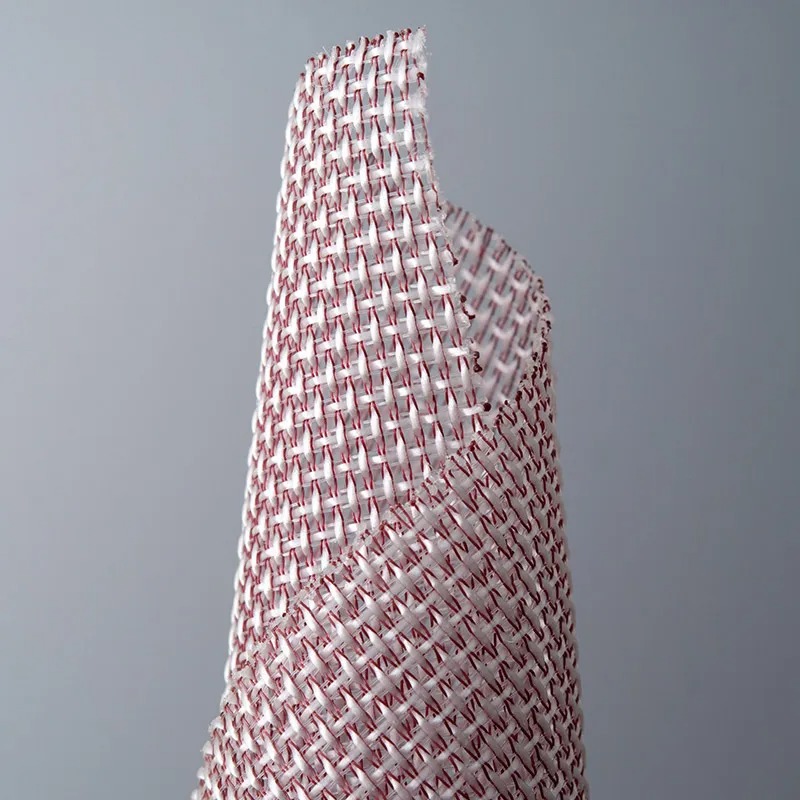
Begin with the separation task, then choose the construction that supports it. The same material can behave differently when yarn and weave change.
Woven cloth is formed by interlacing yarns in the warp and filling directions. That construction creates a repeatable fabric structure, but the filtration behavior is not defined by the word “woven” alone. Fiber type, yarn design, yarn size, weave pattern, finishing, and fabric geometry all affect the result.
For an industrial buyer, the useful question is not “Which woven cloth is best?” It is “Which woven construction fits this machine, slurry, cake, cleaning method, and target result?”
Public filter-cloth selection guidance commonly distinguishes monofilament, multifilament or continuous-filament, and spun or staple yarns. Their surface and internal structure create different tradeoffs between particle capture, cake release, cleanability, flexibility, and resistance to blinding.
A single, smoother extrusion is commonly considered when cake release, cleanability, and resistance to particles lodging in the yarn are important. The lower surface area can change particle capture, so clarity must be checked.
Several continuous filaments form the yarn. The surface and internal spaces can support particle retention, while the selection must account for blinding and cake release in the actual slurry.
Short fibers are spun into yarn. The larger surface area can support particle retention, but the buyer should ask how the construction will clean and release cake in the intended cycle.
Different yarn designs may be used in the warp and filling directions. This is a construction decision, not a generic performance guarantee, and needs to be tied to the equipment and separation target.
Weave pattern changes stability, flexibility, mechanical behavior, particle retention, cake release, and susceptibility to blinding. The pattern should be selected with the yarn and application rather than treated as an isolated label.
| Weave context | Industry selection point | Questions to ask |
|---|---|---|
| Plain weave | Stable construction and particle retention are often important considerations. | Will the stability and retention support the required clarity and cake release? |
| Twill weave | Mechanical strength and a greater yarn population per area may be considered for demanding service. | Does the press or slurry create enough mechanical load or abrasion to justify this direction? |
| Satin weave | A smoother, more flexible face may be considered when cake release and conformability matter. | Will the smoother surface help the cake release without losing the required retention? |
| Basket or leno weave | Specialized support or open-structure requirements may call for these constructions. | Is the cloth a primary separation surface or a support / backing layer? |
Woven filtration media are used across more than one equipment family, but compatibility is always a fit question. The equipment controls the cloth shape, attachment, load, flexing, cleaning, drainage path, and replacement dimensions.
Check plate style, feed arrangement, cloth attachment, gasket or edge treatment, openings, and the required cake release behavior.
Check the rotating geometry, support, drainage, balance, mechanical loading, and how the cloth is retained on the basket.
Continuous equipment uses a separate belt product family. Review belt dimensions, joints, drainage, and machine context rather than assuming a press-cloth construction will transfer directly.
The current cloth and equipment drawing often provide more useful compatibility evidence than a generic material description.
Woven is a construction category, not a material. Polypropylene and polyester can both appear in woven filter-cloth discussions, but the material decision still depends on chemistry, temperature, mechanical loading, and the required separation result.
Review when chemical compatibility and a widely used synthetic option are important priorities. Do not assume a generic PP statement covers every liquid or operating condition.
Review when thermal or mechanical priorities point toward PET, while confirming the actual liquid chemistry and operating conditions.
The fabric is only one part of a finished replacement. A woven cloth may require cutting, sewing, edge reinforcement, feed openings, necks, seams, gaskets, eyelets, ties, or other attachment details. The construction must remain stable through installation, operation, cleaning, and removal.
Use the Custom Fabricated Filter Cloth page when the project is drawing-led or sample-led. Final fabrication details, available finishing options, and supply scope must be confirmed against the drawing or sample.
No. Woven describes the fabric construction. Fiber, yarn design, weave, finishing, and finished fit determine how the cloth behaves in a particular process.
There is no universal answer. Smoother yarn designs are commonly considered for release and cleanability, but the required retention, slurry, cleaning method, and machine load must be reviewed at the same time.
Woven filter cloth is a common filter-press media category, but the cloth still needs to match the plate type, feed arrangement, attachment, openings, and process conditions. See Filter Press Cloth.
Send the existing cloth, a close photograph of the fabric surface, the equipment details, and the process information. The weave should be verified rather than inferred from appearance alone.
Send the old woven cloth or drawing together with the equipment and process information. The review should connect yarn, weave, material, and finished fit.