
Temperature-led selection
Record normal and peak operating temperatures, exposure time, drying or washing steps, and thermal cycling. Use the documented product specification for the selected construction.
Polyester, also called PET in technical filtration discussions, is a material option for buyers balancing temperature tolerance, mechanical and dimensional demands, abrasion, chemistry, and cake behavior.
Discuss PET Filter Cloth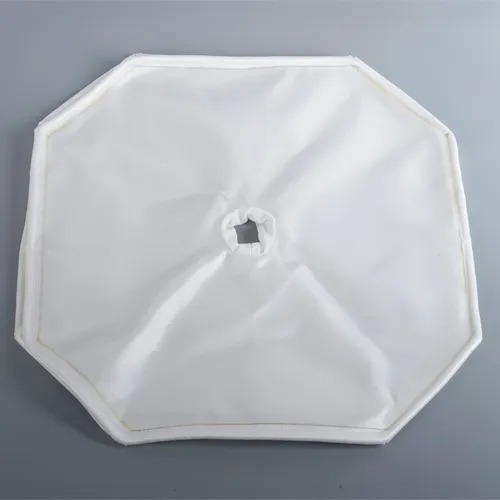
Industry filter-cloth guidance commonly evaluates polyester when higher temperature tolerance or mechanical and dimensional demands deserve more weight than a chemistry-first choice. Compare PET with the actual liquid, chemistry, and machine conditions.
Polyester is a synthetic fiber used in woven filtration media. In industrial filter-cloth selection, PET is often considered when the process places more weight on temperature tolerance, dimensional stability, mechanical loading, or repeated handling than a chemistry-first PP option.
Review the actual liquid, concentration, exposure, cleaning conditions, and hydrolysis risk alongside temperature and mechanical demands. Match the fiber, yarn, weave, finish, and finished construction to documented product data.
Ask whether temperature, flexing, pressure, abrasion, or dimensional behavior drive the replacement problem. PET may deserve comparison in those conditions; check chemistry and, where relevant, hydrolysis risk alongside any mechanical or dimensional priority.
Record normal and peak operating temperatures, exposure time, drying or washing steps, and thermal cycling. Use the documented product specification for the selected construction.
Record press squeeze, flexing, scraping, belt tension, basket rotation, cake weight, and cycle frequency. Yarn and weave can matter as much as the polymer name.
Sharp, hard, or abrasive particles can change the construction and maintenance interval. Describe the solids and observed wear when selecting construction.
Provide the actual liquid, concentration, pH, temperature, exposure time, and cleaning chemistry. Check chemical compatibility and hydrolysis risk where relevant, then compare PET with PP Filter Cloth using the process evidence.
PP and PET address different selection priorities. Compare the risk that matters most in this machine and process rather than looking for a universally better material.
| If the main risk is... | PET may deserve closer review | PP may deserve closer review |
|---|---|---|
| Temperature or thermal cycling | Review when temperature tolerance is a leading requirement, using documented product data. | When the selected PP construction fits the equipment and chemistry is the stronger driver. |
| Mechanical loading or dimensional behavior | When pressure, flexing, abrasion, or dimensional stability need careful review. | When the selected PP yarn and weave fit the equipment and process demands. |
| Chemical compatibility | Review against the actual liquid, cleaning chemistry, and hydrolysis risk where relevant. | Often a reason to evaluate PP; review the actual chemicals and operating conditions. |
| Cake release and blinding | Driven by yarn, weave, finish, solids, and cleaning—not the PET name alone. | Driven by yarn, weave, finish, solids, and cleaning—not the PP name alone. |
A finished polyester cloth also depends on yarn design, weave pattern, finishing, and machine attachment. A PET cloth for a filter press may have different shape, openings, seams, edge treatment, and loading requirements from a cloth for another equipment family.
Review plate type, feed arrangement, gasket or edge details, attachment, cake release, cleaning, and the reason for replacement.
Compare monofilament, multifilament, spun yarn, and weave options against retention, drainage, blinding, and release.
For belt or vacuum equipment, see Filter Belts and use the belt-specific dimensions and joint requirements.
Use Custom Fabricated Filter Cloth for drawing-led or sample-led review, and include the drawing or sample with the request.
Start with the old cloth and the machine. Record the current material if known, but also document where the current design succeeds or fails: thermal exposure, wear, stretching, leakage, blinding, cake release, installation, or cleaning.
Compare them using the actual liquid, machine, construction, and documented limits; include hydrolysis risk where relevant.
Polyester is a common material option in industrial filter-cloth discussions, including filter-press applications. Match the finished cloth to the plate, feed, attachment, cleaning, and process conditions. See Filter Press Cloth.
Assess particle shape, equipment load, flexing, cleaning, and current failure; yarn, weave, finishing, and finished geometry all contribute.
Ask for the documented value for the selected construction and process conditions.
Send the temperature, chemistry, equipment, current cloth, and observed wear or release problem. The comparison can then be made around the real operating priority.